

Atlanta receives substantial rainfall throughout the year, and periods of warm, humid weather can make moisture management inside homes especially important. The U.S. Environmental Protection Agency (EPA) explains that high indoor humidity increases the likelihood of mold growth, particularly when moisture settles on materials such as wood, carpet, drywall, and fabric. Keeping indoor relative humidity below 60 percent, and ideally between 30 and 50 percent, can help reduce these conditions.
For homeowners who have converted a spare bedroom, basement, sunroom, or similar area into a yoga, meditation, stretching, or breath-focused studio, moisture deserves particular attention. Knowing when water damage cleanup in Atlanta may be necessary can help protect a space where people spend time close to floors, breathe deeply, and regularly handle mats, cushions, blocks, and other shared equipment.
Why Moisture Matters in a Home Practice Space
A practice room may look clean while moisture is developing somewhere out of sight. A small roof leak can dampen ceiling materials, condensation can collect around air-conditioning components, and water can enter behind walls or beneath flooring without immediately leaving a visible stain. The National Institute for Occupational Safety and Health (NIOSH) notes that hidden sources, such as wet insulation above a ceiling, can contribute to building dampness.
This matters because moisture supports biological growth. The Centers for Disease Control and Prevention (CDC) reports that mold can develop around leaks and flooding and may grow on drywall, carpet, fabric, insulation, wood, and other common indoor materials. Damp buildings have also been associated with respiratory symptoms and allergic responses in some occupants.
A quiet practice space creates its own considerations. People may spend extended periods sitting or lying near the floor, and yoga or exercise mats can repeatedly contact the same surface. Bare feet and hands may also come into direct contact with flooring. These habits do not mean the room is inherently unhealthy, but they make keeping surfaces clean, dry, and well maintained particularly sensible.
5 Warning Signs That Can Appear Before Obvious Water Damage
1. A Persistent Musty Odor
A room does not need visible mold patches to justify further inspection. The CDC identifies a musty smell as one possible indication of mold. An odor that returns after cleaning, especially near a wall, closet, floor edge, or ceiling, may point to moisture that has not been addressed.
2. Condensation That Keeps Returning
Moisture repeatedly appearing on windows, pipes, walls, or other cool surfaces can signal excessive humidity. The EPA recommends addressing condensation promptly by drying affected surfaces and reducing the underlying source of moisture.
3. Changes in Flooring
Watch for carpet that remains damp, flooring that lifts or changes shape, or unexplained discoloration near baseboards. Water can travel underneath finished surfaces, meaning the place where damage becomes noticeable may not be where the moisture originally entered.
4. Mats or Fabrics That Feel Damp
Practice mats, blankets, bolsters, curtains, and rugs can hold moisture when indoor humidity stays elevated. The EPA advises removing or replacing absorbent materials when they cannot be thoroughly cleaned and dried, particularly after significant water exposure.
5. Unexplained Changes in Comfort
Some people experience irritation around damp or moldy environments. Findings summarized by the CDC associate exposure with symptoms such as nasal irritation, coughing, wheezing, itchy eyes, and skin reactions in susceptible individuals. Symptoms alone cannot establish that mold is present, so persistent concerns should be discussed with an appropriate healthcare professional and the building should be checked for moisture.
What Water Damage Remediation Generally Involves
Finding moisture does not automatically mean extensive reconstruction is required. The response depends on the water source, how long materials have remained wet, which materials are affected, and how far moisture has traveled.
- Locate and stop the source. The first priority is identifying the leak, seepage, plumbing problem, condensation issue, or other source so additional water does not enter the area.
- Assess the affected materials. Flooring, walls, insulation, furnishings, and nearby structural materials may need inspection to determine how far moisture has spread.
- Remove standing water and damaged materials. Water may be extracted, while materials that cannot be adequately cleaned or dried may require removal.
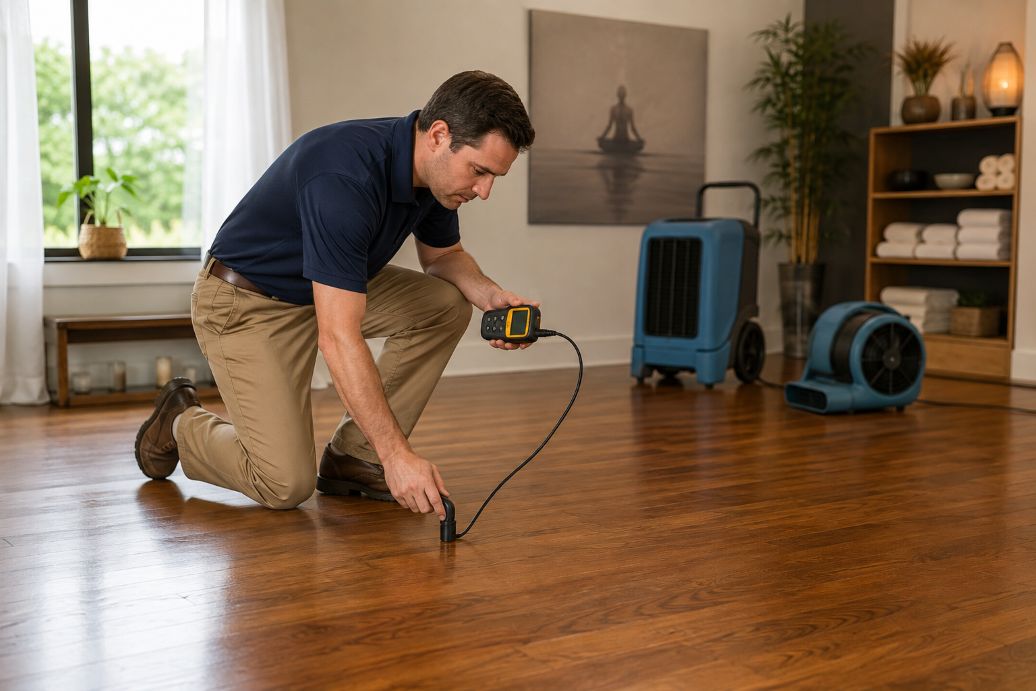
- Dry and dehumidify the space. Air movement and dehumidification can help bring moisture levels down. EPA and OSHA guidance stresses the importance of drying wet materials within roughly 24 to 48 hours when possible to limit mold growth.
- Clean and restore the area. Once moisture is controlled, salvageable surfaces can be cleaned and thoroughly dried before repairs or replacement materials are installed.
When Is the Practice Space Ready Again?
Returning a mat to the floor should come after the moisture source has been corrected and affected materials are dry. The EPA emphasizes that cleaning mold without correcting the water problem leaves conditions that can allow the problem to return.
A simple humidity meter can also help homeowners watch conditions after restoration. Good airflow, functioning air conditioning or dehumidification, and prompt leak repairs provide practical safeguards. Homeowners may also want to consider how heating and ventilation for a home yoga studio can support a comfortable practice environment, especially when the room is used frequently or tends to retain humidity. Routine checks around windows, walls, ceilings, and flooring can then help identify new moisture problems before they spread.
A home practice room is meant to support concentration, movement, and comfortable breathing. Protecting that environment therefore involves more than keeping mats and floors visibly clean. Paying attention to humidity and subtle signs of hidden moisture can help preserve the room itself while creating a cleaner, more comfortable space for everyone who uses it.